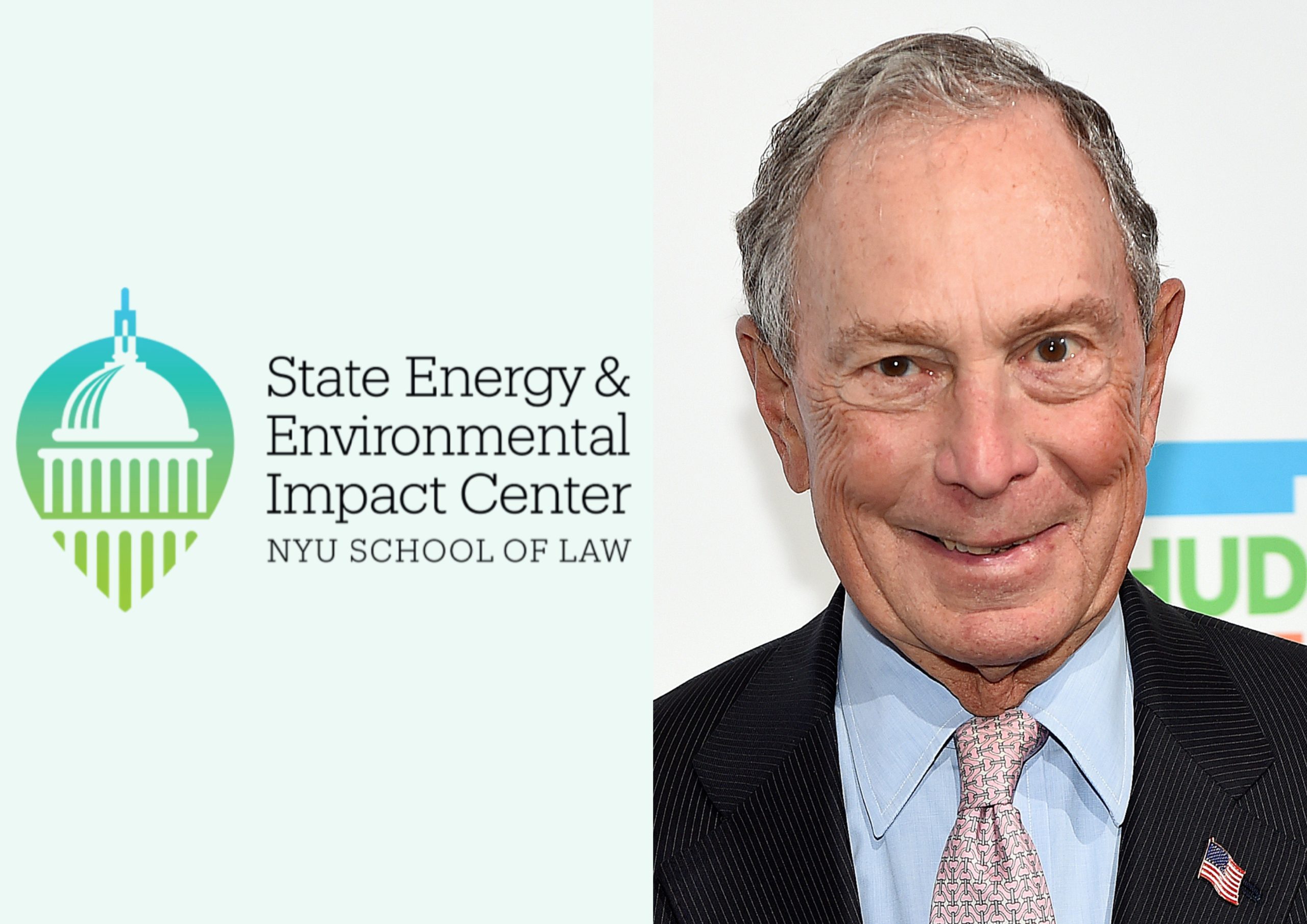
The State Energy and Environmental Impact Center announced its closure on August 31, ending a program that placed paid climate fellows inside the offices of Democratic state attorneys general across the United States. The shutdown came without a press release, and the center's website now lists its content as historical material as of that date.
Founded in 2017 with two seed grants of $2.8 million each from the Bloomberg Family Foundation, the center operated out of the New York University School of Law. Its stated mission was to "accelerate state‑level climate action" by embedding specialists in state legal offices, public service commissions and other agencies that regulate energy and environmental matters.
According to the center's own reports, fellows were hired as special assistants or special attorneys general and worked on lawsuits targeting oil and gas companies, on regulatory actions favoring wind and solar projects, and on filing comments that support federal green‑energy initiatives. The program expanded to at least ten states, including Minnesota, Maryland and New York, and also placed fellows in the District of Columbia attorney general's office.
One of the most visible fellows, Lauren Cullum, was listed as a special assistant attorney general in Washington, D.C. Since 2022 she has been named on several environmental‑justice lawsuits against chemical manufacturers and has authored federal comment letters that argue for renewable‑energy policies. The center also placed fellows in state public service commissions, bodies that oversee utility rates and approve pipelines and power‑plant permits.
Critics began to focus on the arrangement after it emerged that the center was paying the salaries of these public officials. In 2023 the House Oversight and Government Reform Committee opened an investigation, questioning whether the fellows were acting independently or simply advancing the priorities of a billionaire donor. The committee's report said the program "effectively offers states partisan money from a billionaire to carry out official functions of their offices."
Republican committee chairman Rep. James Comer of Kentucky told the Washington Free Beacon that the center "undermined public integrity and pushed radical Democrat policies that increase energy costs for Americans, despite billing itself as nonpartisan." He added that the committee was pleased to see the center cease operations.
State‑level scrutiny followed the congressional probe. In early 2024 Wisconsin Senate leaders launched an investigation after discovering that the state attorney general's office employed a "special attorney general" whose $90,000 annual salary was funded by the center. Senate President Mary Felzkowski said outside influence from self‑interested sources is unacceptable and ordered a committee to coordinate the inquiry.
Two Wisconsin dairy‑farm groups also filed a lawsuit in February 2025, alleging that the center's fellow gave the attorney general's office "unique, insider access and influence over DOJ's work on agricultural and other environmental issues." The complaint claimed the fellow coordinated enforcement actions that targeted dairy farms, a sector vital to the state's economy. Court records show an oral ruling on the case is scheduled for later this month.
The ethical concerns stem from the principle that public officials should make decisions based on the interests of their constituents, not on the agenda of a private donor. Paying a public employee's salary creates a financial tie that can be seen as a conflict of interest. Legal scholars note that while philanthropy can fund public‑policy research, direct compensation of government staff raises questions under federal ethics rules and state conflict‑of‑interest statutes.
Supporters of the program argue that the fellows provide expertise that state attorneys general lack, especially in complex climate and energy law. They point out that many AG offices have limited budgets and that the climate litigation wave has generated a surge in cases that require specialized knowledge. Proponents also note that the center's advisory council included executives from the wind‑energy sector and the American Clean Power Association, suggesting a close alignment with industry interests.
The political fallout is likely to influence upcoming elections in several swing states where AG offices have become focal points of climate litigation. Republican candidates have begun to frame the use of outside‑funded fellows as evidence of Democratic overreach, while Democratic incumbents defend the practice as a necessary tool to hold polluters accountable. The issue may also affect federal energy policy debates, as AG lawsuits often pressure the Department of Justice to prioritize or deprioritize enforcement actions.
For Canadian observers, the development highlights a parallel trend in provincial ministries of the environment that have partnered with private foundations to fund climate research and litigation support. While Canada does not have a system of state attorneys general, provincial attorneys general perform similar legal functions. The scrutiny of the Bloomberg‑backed model may prompt Canadian policymakers to examine the transparency of funding arrangements for climate‑related legal work.
Looking ahead, the House Oversight Committee is expected to hold additional hearings on the matter, and several members have signaled interest in drafting legislation that would require greater disclosure of any private funding that directly supports the salaries of public officials. At the state level, Wisconsin's investigation could result in a court ruling that clarifies whether such arrangements violate state ethics codes.
The State Energy and Environmental Impact Center's website now lists its content as historical material as of August 31, 2026, and the contact email has been changed to a private address. Neither the center nor Bloomberg Philanthropies responded to requests for comment.
As the investigations continue, the episode underscores the tension between climate activism, philanthropic influence and the traditional expectation that government officials act independently of private donors. How Congress and state legislatures choose to address the issue will shape the rules governing future collaborations between NGOs, foundations and public agencies.