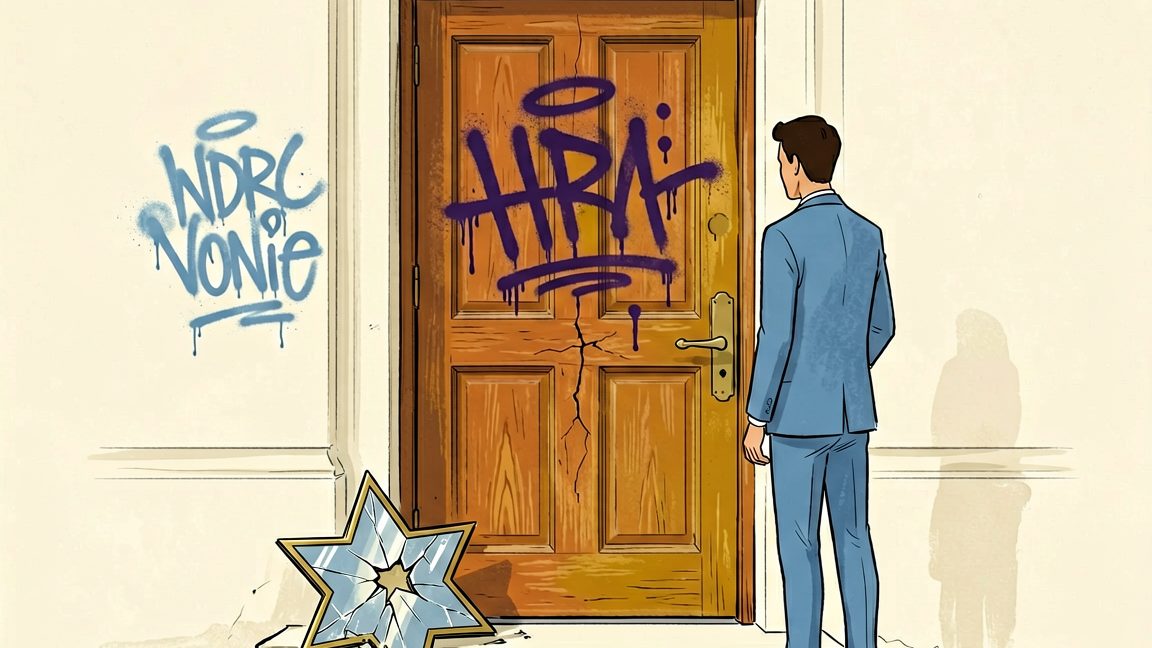
The surge in antisemitic attacks and rhetoric since the October 7 2023 attacks on Israel has unsettled the American Jewish community, prompting many to question their long‑standing support for the liberal movement.
A Turning Point
On 7 October 2023, a wave of violence in Israel resulted in the massacre and kidnapping of Israelis. The events marked a watershed for many American Jews, who now confront what they describe as left‑wing antisemitism.
Ungar‑Sargon’s Narrative
Journalist Batya Ungar‑Sargon interprets the October attacks as a wake‑up call. In her newly released book, The Jews and the Left, she traces the relationship between American Jews and the left from early immigration to the present day. She contends that the left’s original moral clarity – a simple division between right and wrong – has been replaced by a more nuanced, and at times toxic, framework that casts Jews as embodiments of white privilege and oppression.
Drawing on her own experience as a Jewish journalist and on the stories of her ancestors who arrived in America seeking refuge and opportunity, Ungar‑Sargon argues that Jews, once integral to the liberal movement, now find themselves at odds with a left that is increasingly hostile to Israel and to Jewish identity.
Historical Context
The book cites commentator Robert Warshow, who in 1947 observed that the communist movement had already begun to infiltrate American intellectual life, promoting an anti‑Zionist stance that would later become a hallmark of left‑wing antisemitism.
While Ungar‑Sargon’s account is personal and historically grounded, the reviewer notes that it represents only one perspective within a broader, multifaceted history.
Political Fallout
The Democratic Party, traditionally a stronghold of Jewish support, now faces a crisis of conscience as many of its members and allies adopt increasingly hostile positions toward Israel and Jewish identity. This perceived failure to confront antisemitism has generated unease among American Jews, some of whom are reconsidering their loyalty to the party and to the liberal movement as a whole.
The normalisation of antisemitic rhetoric has created a toxic environment that endangers Jews and other minority groups. The left’s reluctance to address its own antisemitism threatens the credibility of a movement that has long championed social justice and human rights.
Free Speech and Campus Climate
In the United States, the First Amendment protects free speech, a principle that courts have interpreted to include hate speech. This legal backdrop forces American Jews to balance their right to expression with the need to protect their communities from hate.
Incidents of antisemitism on college campuses have risen, raising concerns about the safety and well‑being of Jewish students.
Responses and Organisations
Several Jewish organisations are actively working to counter left‑wing antisemitism. The Anti‑Defamation League (ADL), the American Jewish Committee (AJC) and the Simon Wiesenthal Center are among those educating the public and advocating for policies that safeguard Jewish communities.
Implications Beyond the United States
For Canadian readers, the rise of left‑wing antisemitism in the United States carries significance. Canada’s history of welcoming Jewish immigrants and its strong tradition of supporting Israel mean that similar patterns of antisemitic incidents, particularly on campuses, are being observed north of the border.
Canadian Jews are therefore urged to remain vigilant and to advocate for protective policies.
Call to Action
Ungar‑Sargon concludes that the struggle against antisemitism is inseparable from the struggle for America’s soul, urging Jews under assault to lead the effort to speak the truth. She asserts that hatred of Jews is, in effect, hatred of America.
The book is presented as a crucial contribution to the ongoing debate about antisemitism and the left, offering a powerful call for engagement from all who value tolerance, equality and justice.