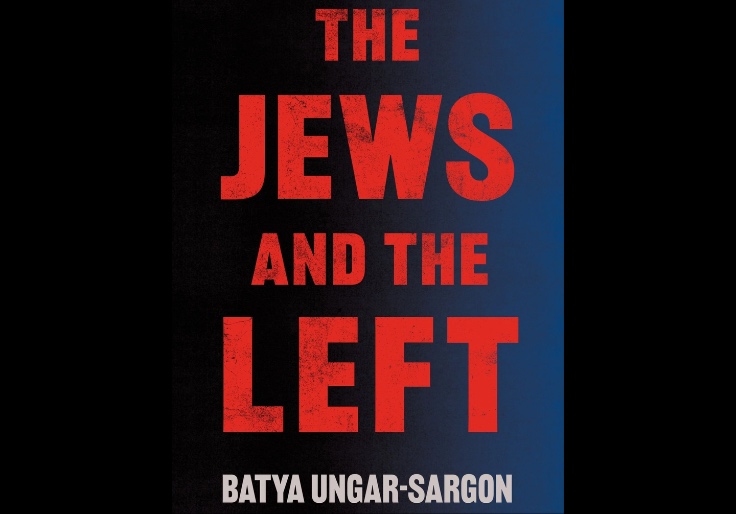
The recent surge in antisemitic attacks and rhetoric has sent shockwaves through the American Jewish community, with many feeling a sense of betrayal and disillusionment with the liberal movement they have long supported. The October 7, 2023, attacks on Israel, which saw the massacre and kidnapping of Israelis, marked a turning point for many American Jews, who are now grappling with the reality of left-wing antisemitism.
For journalist Batya Ungar-Sargon, the attacks were a wake-up call, prompting her to re-examine the complex and often fraught relationship between American Jews and the left. In her book, "The Jews and the Left," Ungar-Sargon explores the historical context of this relationship, from the early days of American Jewish immigration to the present day. She argues that the left's worldview, once based on a clear distinction between right and wrong, has given way to a more nuanced and often toxic ideology of oppressor and oppressed, in which Jews are increasingly seen as the embodiment of white privilege and oppression.
Ungar-Sargon's account is both personal and historical, drawing on her own experiences as a Jewish journalist and the stories of her ancestors, who came to America seeking refuge and opportunity. She shows how American Jews, who have long been a vital part of the country's liberal movement, have found themselves increasingly at odds with the left, which has become increasingly hostile to Israel and Jewish identity.
The book is a powerful indictment of the left's failure to confront its own antisemitism, and a call to action for American Jews to speak out against the hatred and intolerance that threatens their community. Ungar-Sargon argues that the left's antisemitism is not just a matter of individual bigotry, but a systemic problem that reflects a deeper failure of the liberal movement to uphold its own values of tolerance, equality, and justice.
While Ungar-Sargon's warning is timely and necessary, her explanation for the relation of Jews and the left is partial at best. As commentator Robert Warshow noted in 1947, the communist movement had already begun to penetrate American intellectual life, promoting an anti-Zionist ideology that would eventually become a hallmark of left-wing antisemitism. The history of American Jews and the left is complex and multifaceted, and Ungar-Sargon's account is just one part of a larger story that needs to be told.
Despite these limitations, Ungar-Sargon's book is a crucial contribution to the ongoing debate about antisemitism and the left. Her insistence that Jews under assault have to lead the way in speaking the truth is a powerful call to action, and her argument that to hate Jews is to hate America is a reminder that the struggle against antisemitism is a struggle for the very soul of the country. As the American Jewish community navigates this critical moment, Ungar-Sargon's book is a necessary read for anyone seeking to understand the complexities of left-wing antisemitism and the challenges facing American Jews today.
The rise of left-wing antisemitism has significant implications for American politics and society. The Democratic Party, which has long been a stronghold of Jewish support, is facing a crisis of conscience as many of its members and allies are increasingly hostile to Israel and Jewish identity. The party's failure to confront its own antisemitism has created a sense of unease and uncertainty among American Jews, who are beginning to question their loyalty to the party and the liberal movement as a whole.
The impact of left-wing antisemitism on American society is also significant. The increasing normalization of antisemitic rhetoric and ideology has created a toxic environment in which Jews and other minority groups are increasingly vulnerable to hate and intolerance. The failure of the left to confront its own antisemitism has also undermined the credibility of the liberal movement, which has long been a champion of social justice and human rights.
In the United States, the First Amendment protects the right to free speech, which has been interpreted to include hate speech. However, this has created a challenge for American Jews, who must balance their right to free speech with the need to protect themselves and their community from hate and intolerance. The rise of left-wing antisemitism has also led to an increase in antisemitic incidents on college campuses, which has raised concerns about the safety and well-being of Jewish students.
The American Jewish community has a long history of activism and advocacy, and many organizations are working to combat left-wing antisemitism. The Anti-Defamation League (ADL), the American Jewish Committee (AJC), and the Simon Wiesenthal Center are just a few examples of organizations that are working to educate the public about antisemitism and to advocate for policies that protect Jewish communities.
In conclusion, the rise of left-wing antisemitism is a critical challenge facing American Jews and the country as a whole. Ungar-Sargon's book is a powerful call to action, urging American Jews to speak out against the hatred and intolerance that threatens their community. The struggle against antisemitism is a struggle for the very soul of America, and it requires the active engagement and participation of all Americans who value tolerance, equality, and justice.
For Canadian readers, the rise of left-wing antisemitism in the United States has significant implications. Canada has a long history of welcoming Jewish immigrants and has a strong tradition of supporting Israel. However, the rise of left-wing antisemitism in the United States has also led to an increase in antisemitic incidents in Canada, particularly on college campuses. Canadian Jews must be vigilant in combating antisemitism and in advocating for policies that protect Jewish communities.
Ultimately, the struggle against antisemitism requires a collective effort from all people of good will. It requires a commitment to tolerance, equality, and justice, and a willingness to speak out against hate and intolerance. As Ungar-Sargon argues, to hate Jews is to hate America, and the struggle against antisemitism is a struggle for the very soul of the country.